
NETWORKED
COMMUNITIES
Independent Communities. Shared Possibilities. One Connected Network.
Communities should not have to give up their identity, governance, or autonomy to benefit from the people, knowledge, programs, services, and resources available beyond their boundaries.
As part of the Redstring Community Operating System, the RS Network connects independently operated communities through intentional, governed relationships—allowing them to share selected capabilities, work together, and participate in something larger while remaining distinctly their own.
Connect communities without erasing what makes each one unique.
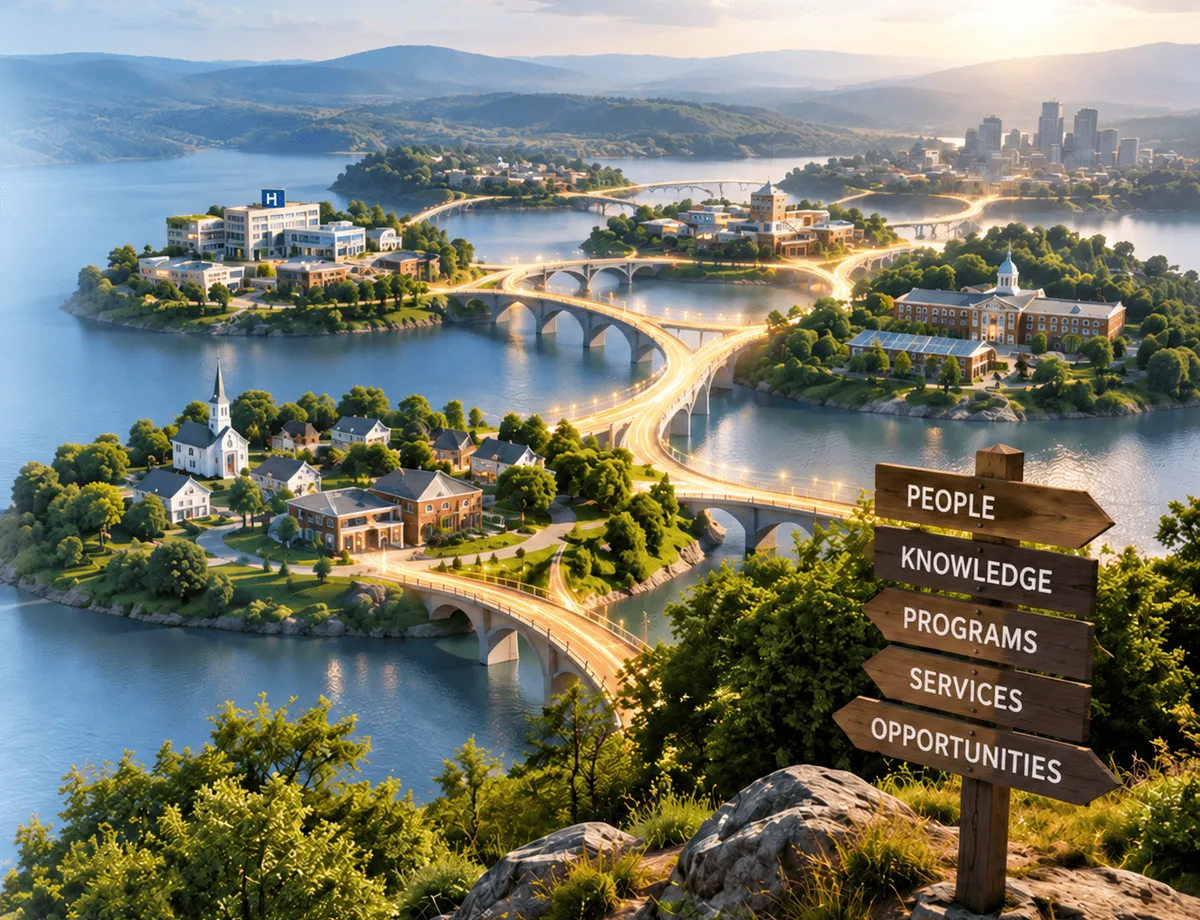
CONNECTED, NOT COMBINED
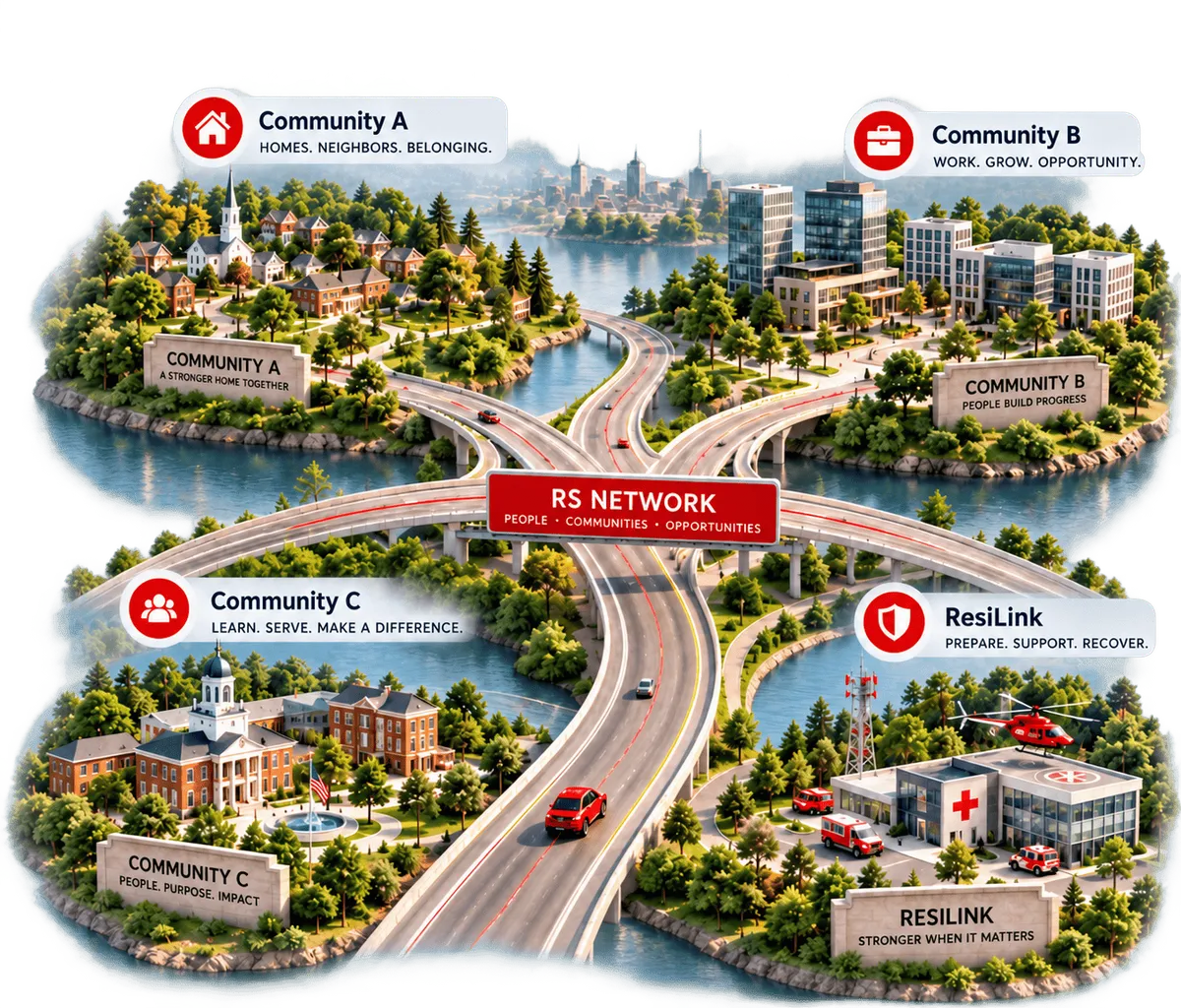
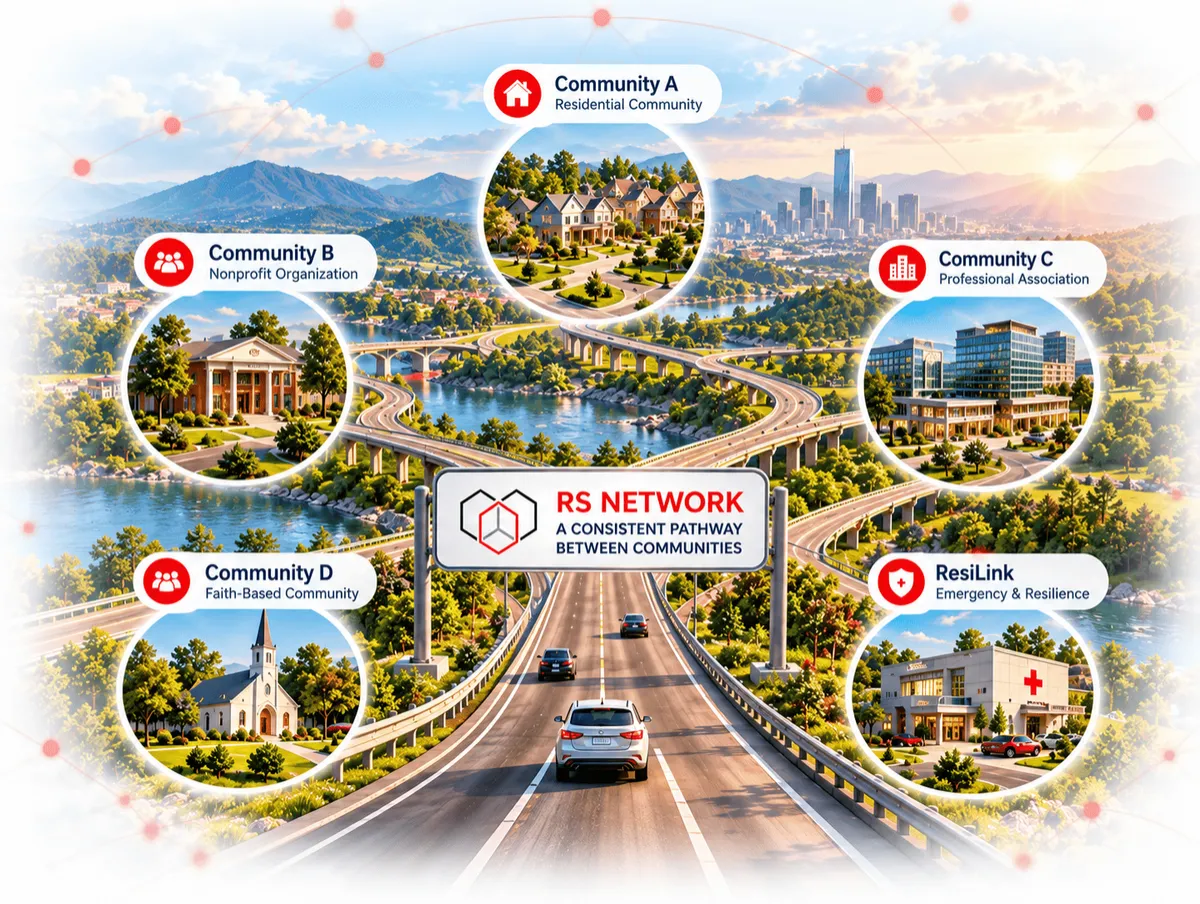
Think of Communities Like Towns Connected by a Highway.
Each community has its own identity, leadership, services and culture. They are unique places, shaped by people they serve.
Each community has its own identity, leadership, services, and culture. They are distinct places shaped by the people they serve.
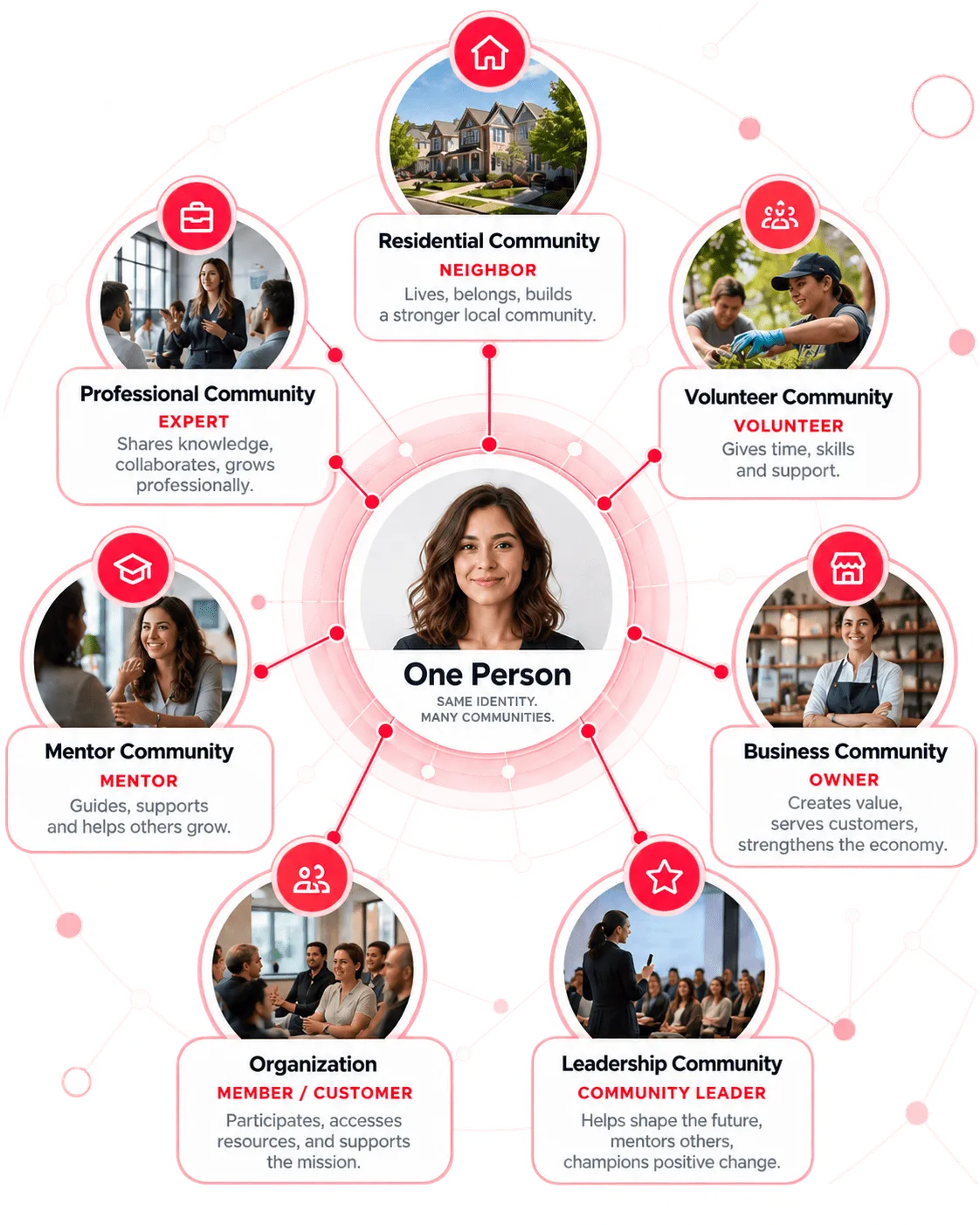
A person may move among communities—to live, work, learn, volunteer, or receive support—while remaining the same person. Different communities. Different opportunities. One connected journey.
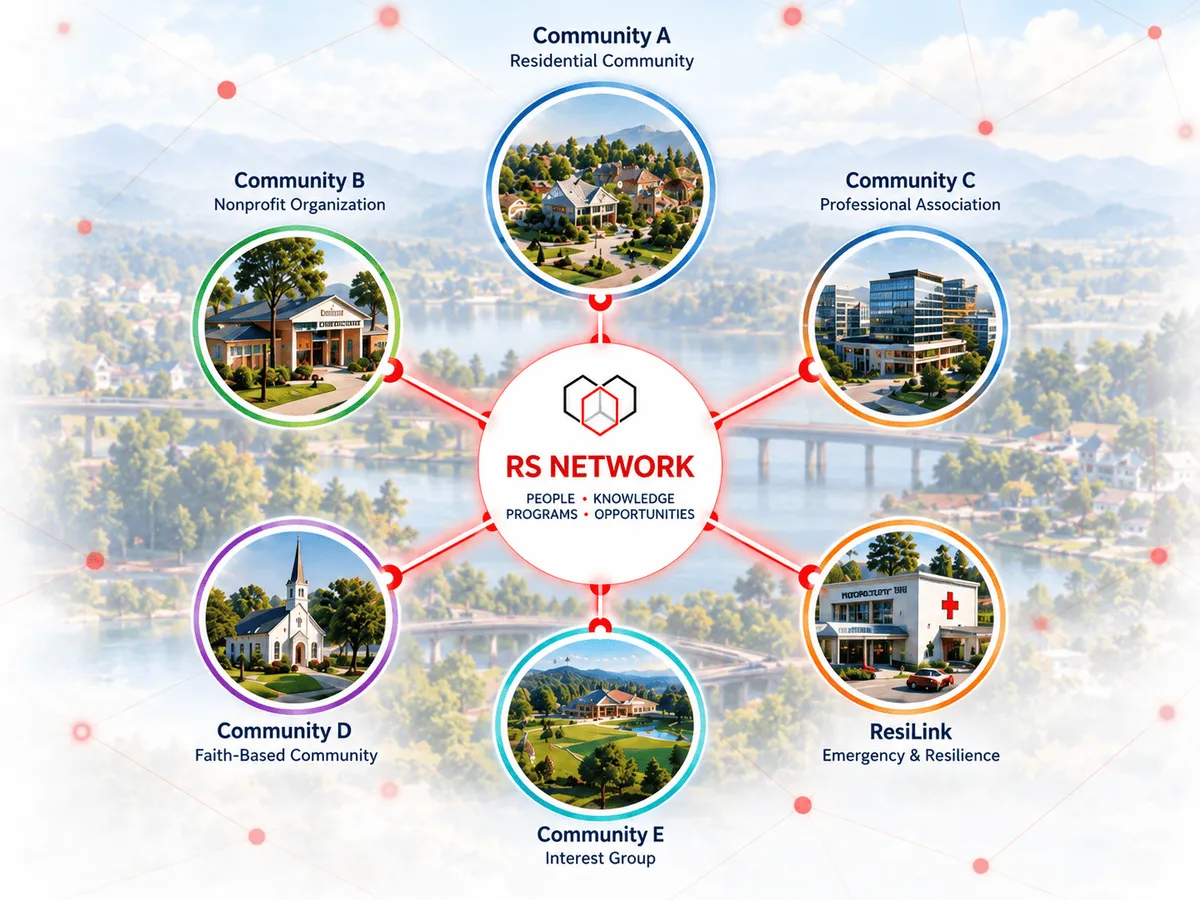
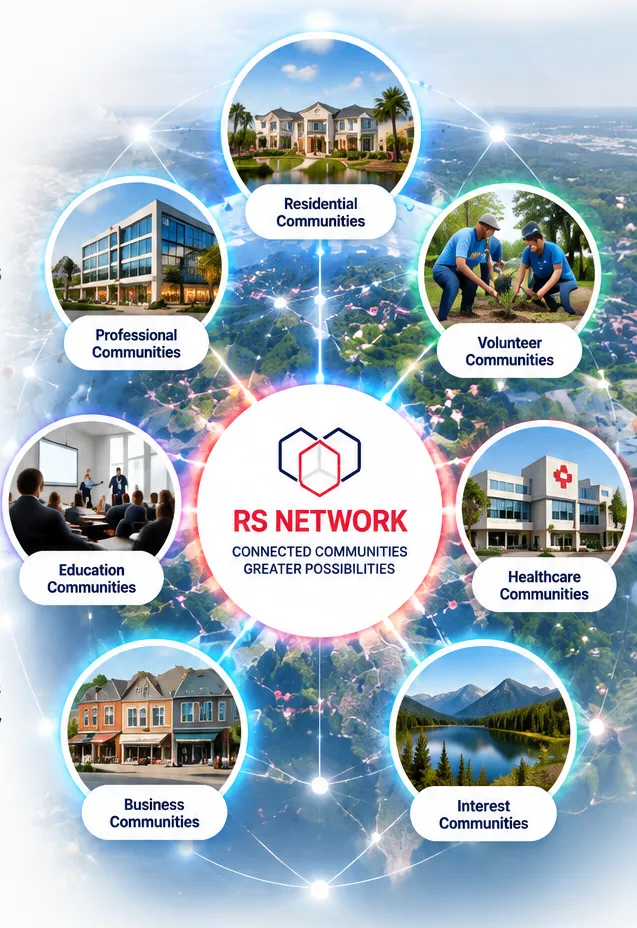
Through the RS Network, communities can form intentional, governed relationships that allow people, knowledge, capabilities, and opportunities to move across community boundaries when appropriate.
The network connects communities. It does not erase their boundaries.
CONNECTIVITY IS INTENTIONAL
GOVERNED CONNECTIONS
Communities Decide How They Connect.
Communities within the RS Network do not simply become connected because they use the same technology.
Connections are intentionally established by the participating organizations.
Each community decides what may be shared, who may participate, what access is available, and what remains within the individual community.
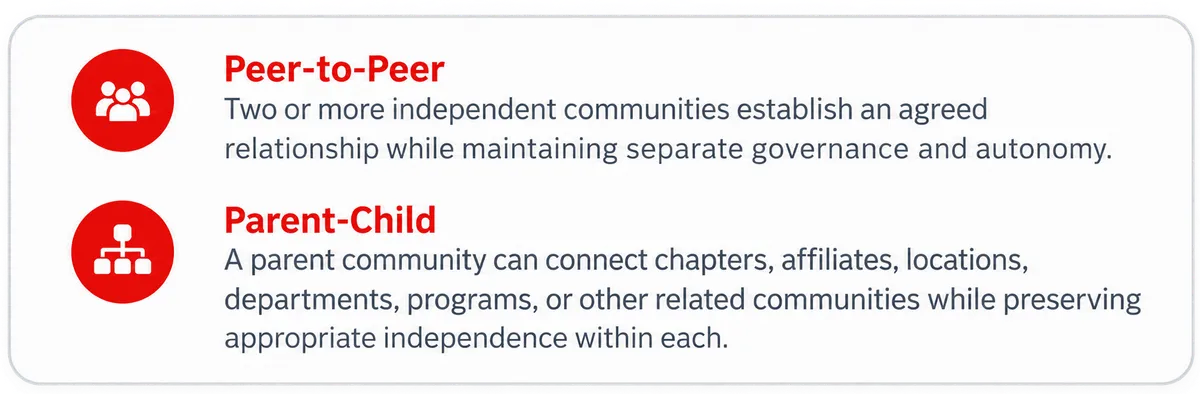
Relationships can take different forms, including:
Communities can also operate under different access models.
One community may be open.
Another may require membership.
Another may be subscriber-based or provide access only to particular roles.
Being connected does not mean every community has to operate the same way.
CONSISTENT PATHWAYS ACROSS COMMUNITIES
DESIGNED FOR THE JOURNEY
The Highway Should Not Suddenly Become a Dirt Road.
Connecting communities is only useful when the connection itself works.
A member should not move from one community environment to another and suddenly encounter an unfamiliar or disconnected experience.
The RS Network provides a common architectural foundation that allows participating communities to create consistent pathways between one another while still controlling their individual environments.
The specific community experience may change.
The governance may change.
The available programs and resources may change.
The member's role may change.
But the underlying pathway remains familiar.
That consistency helps make movement across the network easier, more familiar, and less disruptive.
MEMBERSHIP WITH CONTEXT
The Person Remains Connected.
The Community Determines the Context.
People naturally belong to more than one community.
The same person may simultaneously be a resident, professional, customer, volunteer, mentor, member, business owner, and community leader—moving across communities with a consistent identity, while each community provides its own context, relationships, and opportunities.
• Resident • Professional • Customer
• Volunteer • Mentor
• Member • Business Owner • Community Leader
The identity travels with the person.
The community provides the context.
COMMUNITIES AS RESOURCES FOR ONE ANOTHER
SHARE WHAT MAKES SENSE
Value Created in One Community Can Become Useful
Somewhere Else.
Through negotiated relationships, communities can selectively make assets available across the network.
That can include:
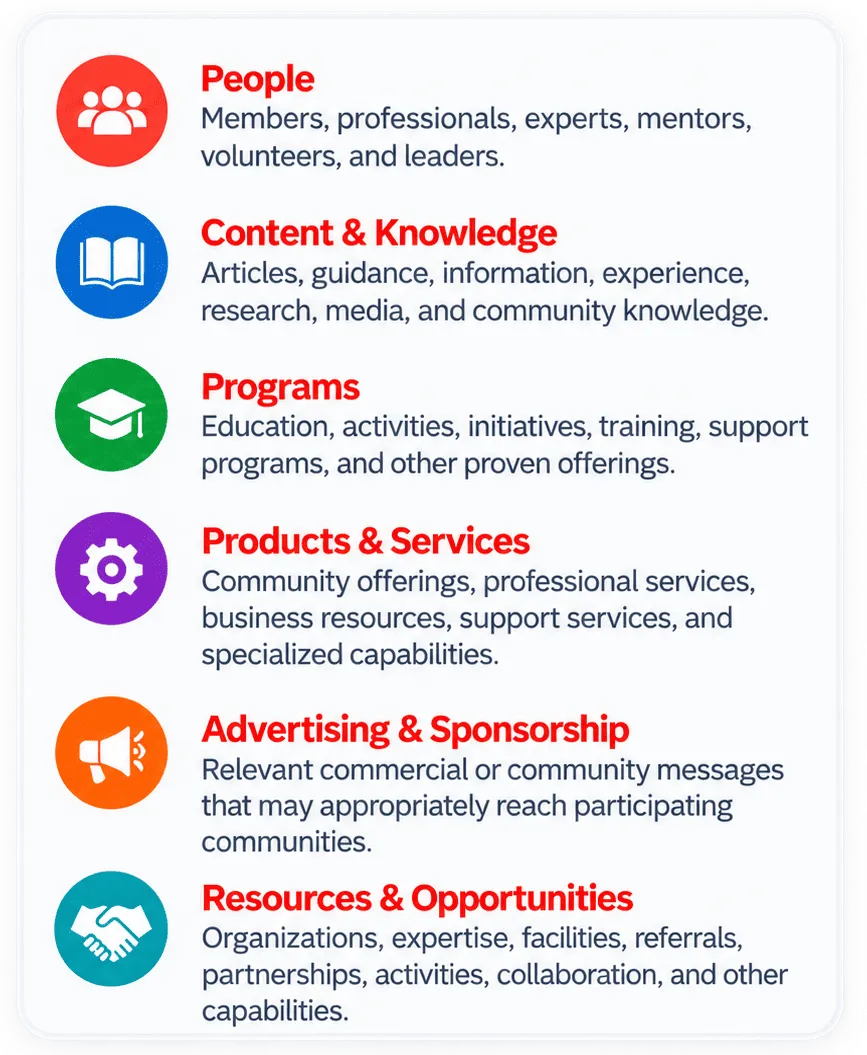
The relationship between communities determines what crosses the boundary and under what conditions.
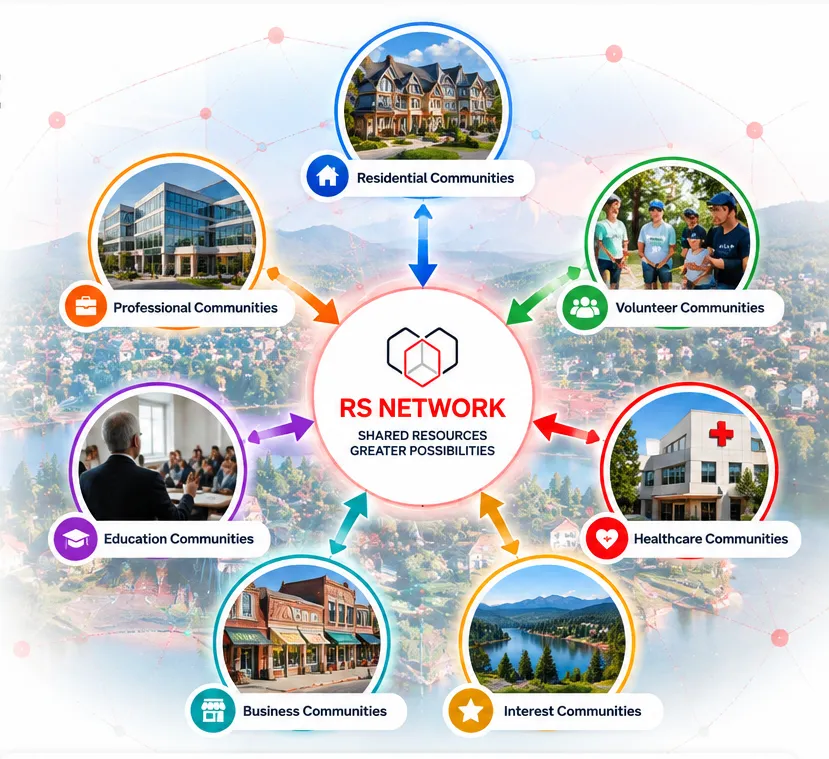
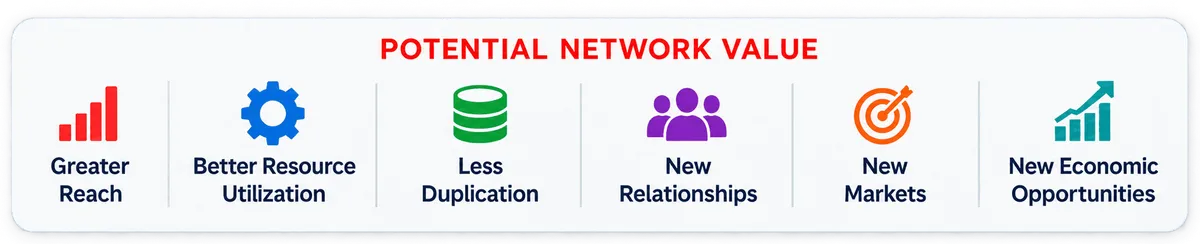
Something valuable developed in one community can serve others without requiring every organization to recreate it independently.
A network where communities can remain autonomous, yet become resources for one another.
COMMUNITIES WITHIN COMMUNITIES
FLEXIBLE
COMMUNITY STRUCTURES
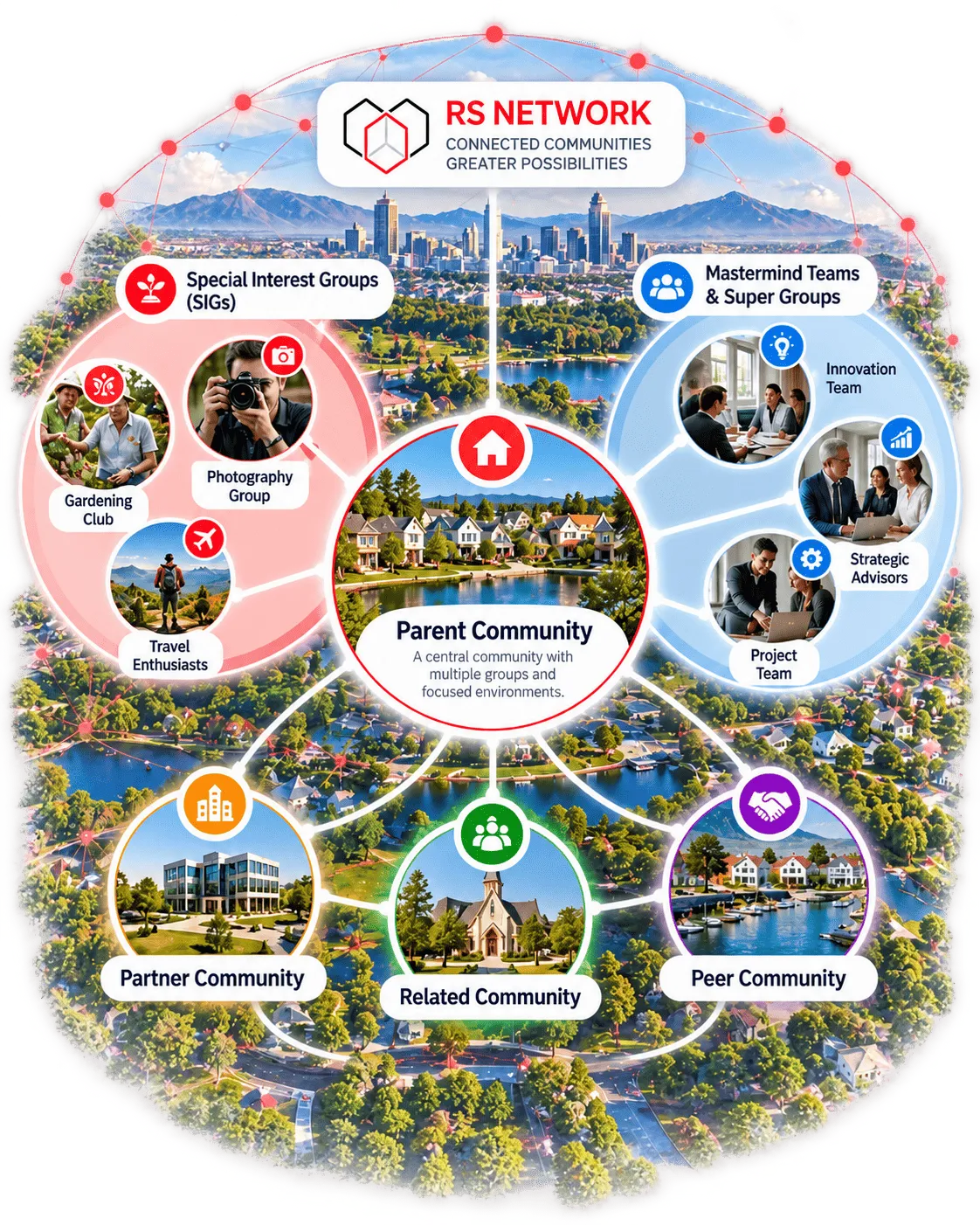
Sometimes the Community Needs a Community of Its Own.
The RS Network is not limited to relationships between separate organizations.
Communities can also support focused groups and specialized environments within or across the larger network.
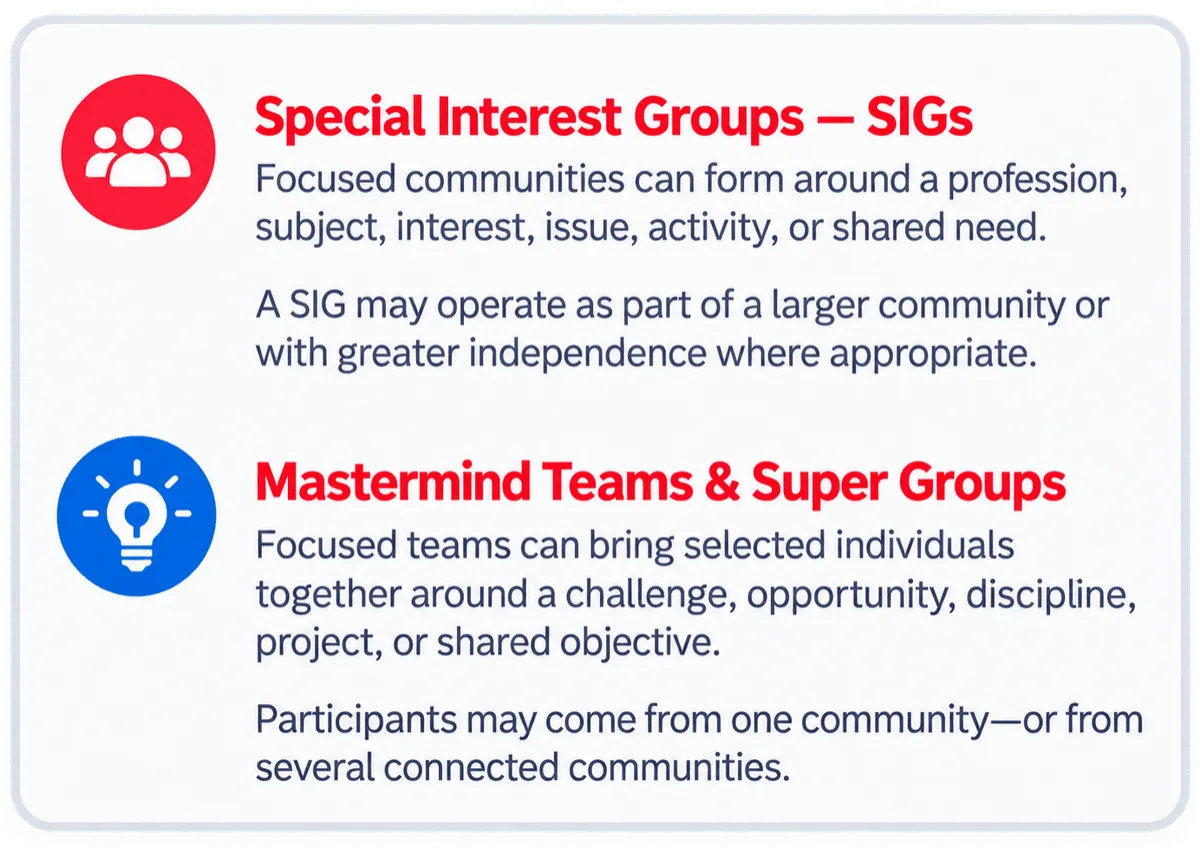
These structures add another level of flexibility:

Each level can have the relationships, access, governance, and resources appropriate to its purpose.
ADAPT WHEN THE SITUATION CHANGES
FROM EVERYDAY COMMUNITY TO
CRISIS RESPONSE
The Situation Can Change Without Requiring the Community to Start Over.
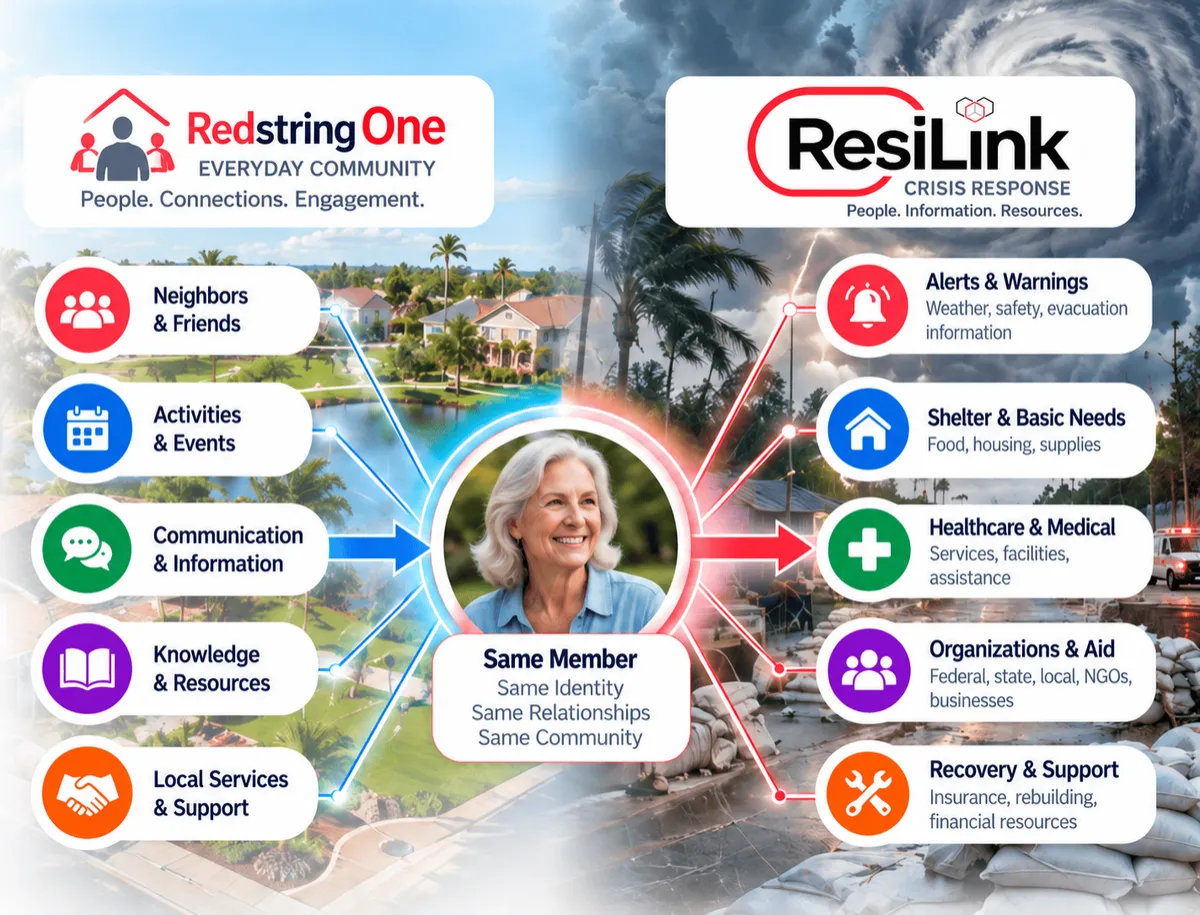
One of the clearest examples of the RS Network is the connection between Redstring One and ResiLink.
A resident may participate every day in a familiar Redstring One community—knowing the environment, relationships, services, and resources around them.
Then a hurricane, wildfire, flood, or other emergency changes what the community needs.
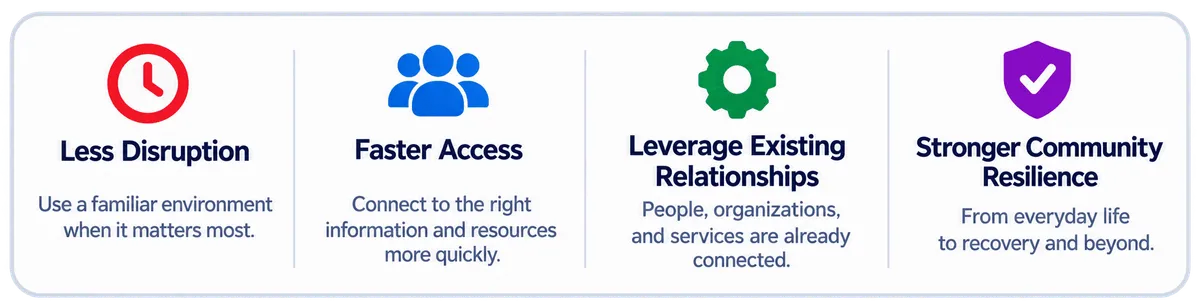
Because ResiLink is connected through the RS Network, crisis-specific information, services, organizations, and support can become available without forcing the member to learn an entirely new environment.
The context changes from everyday community life to preparedness, response, or recovery.
The situation changes.
The connection remains.
That can reduce the amount of community adaptation required at precisely the moment when people may have the least time and capacity to learn something new.

THE LARGER NETWORK EFFECT
MORE THAN
THE SUM OF
THE COMMUNITIES
Every Community Can Add Something to the Network.
As communities connect, each can contribute different strengths to the network.
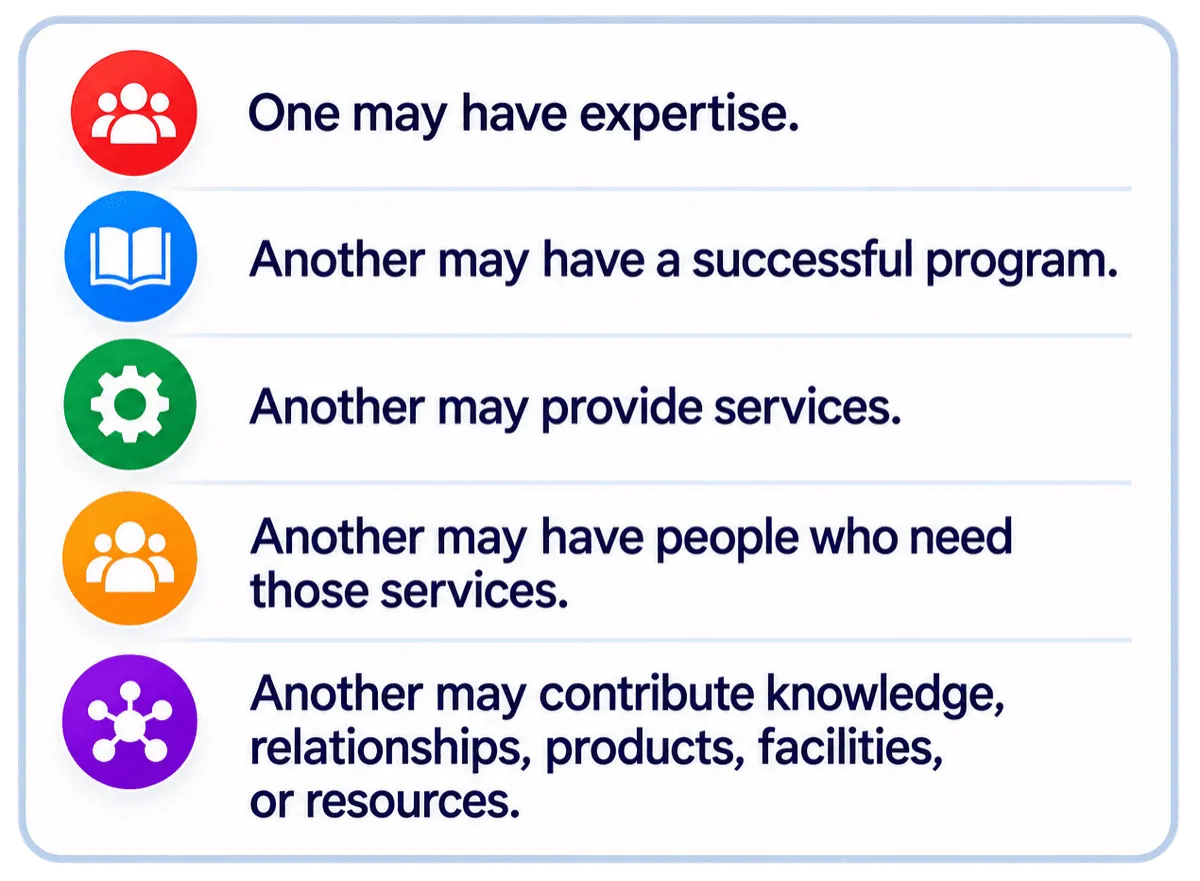
The RS Network creates pathways that make those capabilities more visible and useful across agreed community boundaries.
As participation grows, Community Intelligence can help reveal connections that might otherwise remain hidden:
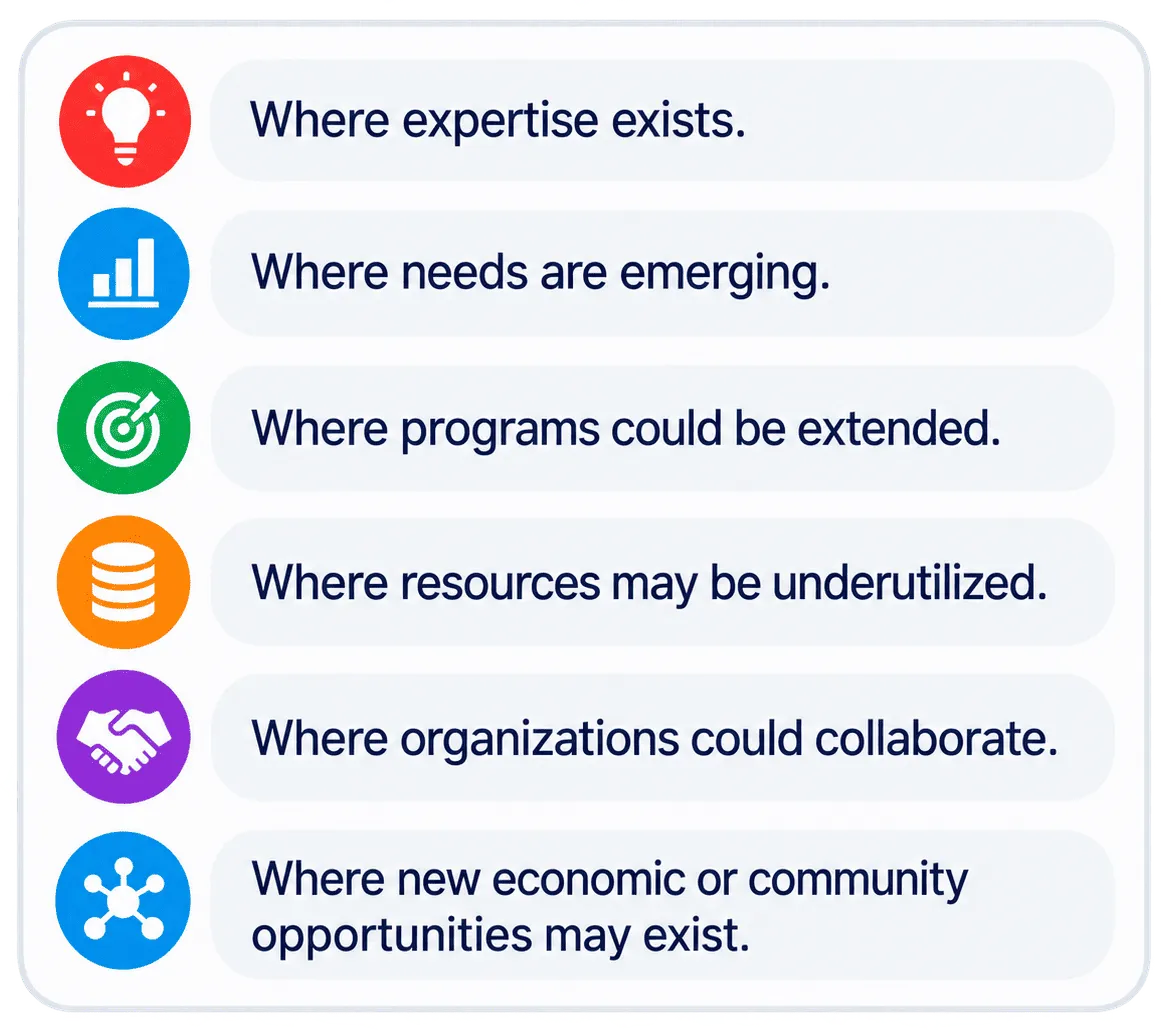
The value of the network grows not simply because more communities participate, but because more useful relationships become possible among them.
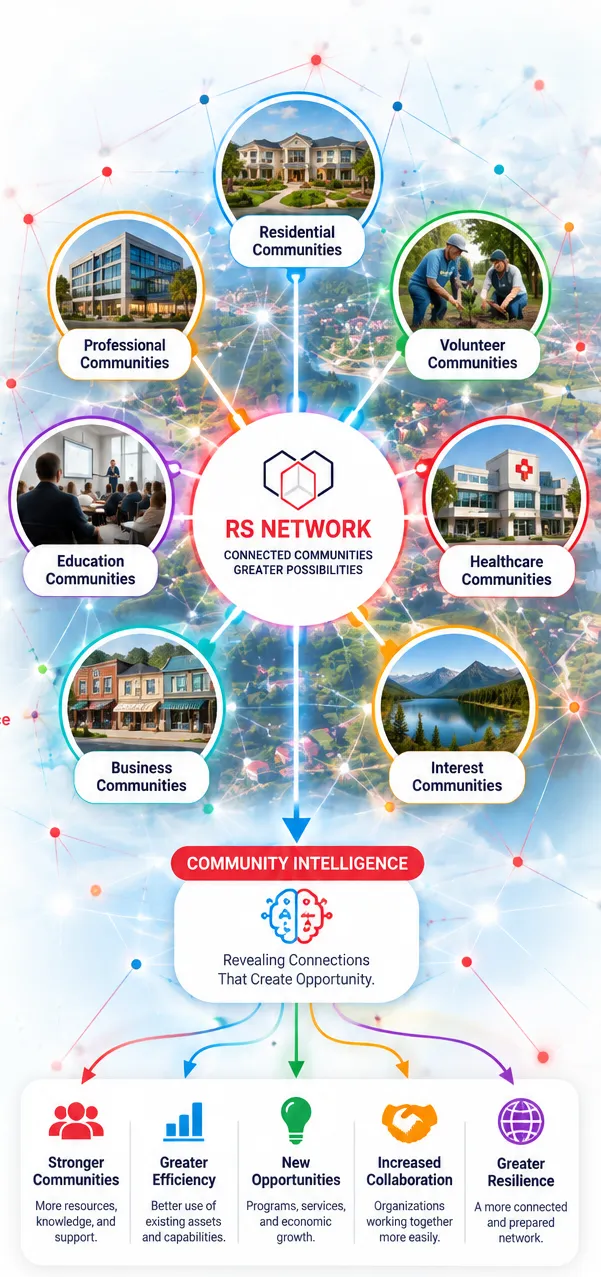
THE RS NETWORK
THE
RS NETWORK
What Could Become Possible If Communities Could Become Resources for One Another?
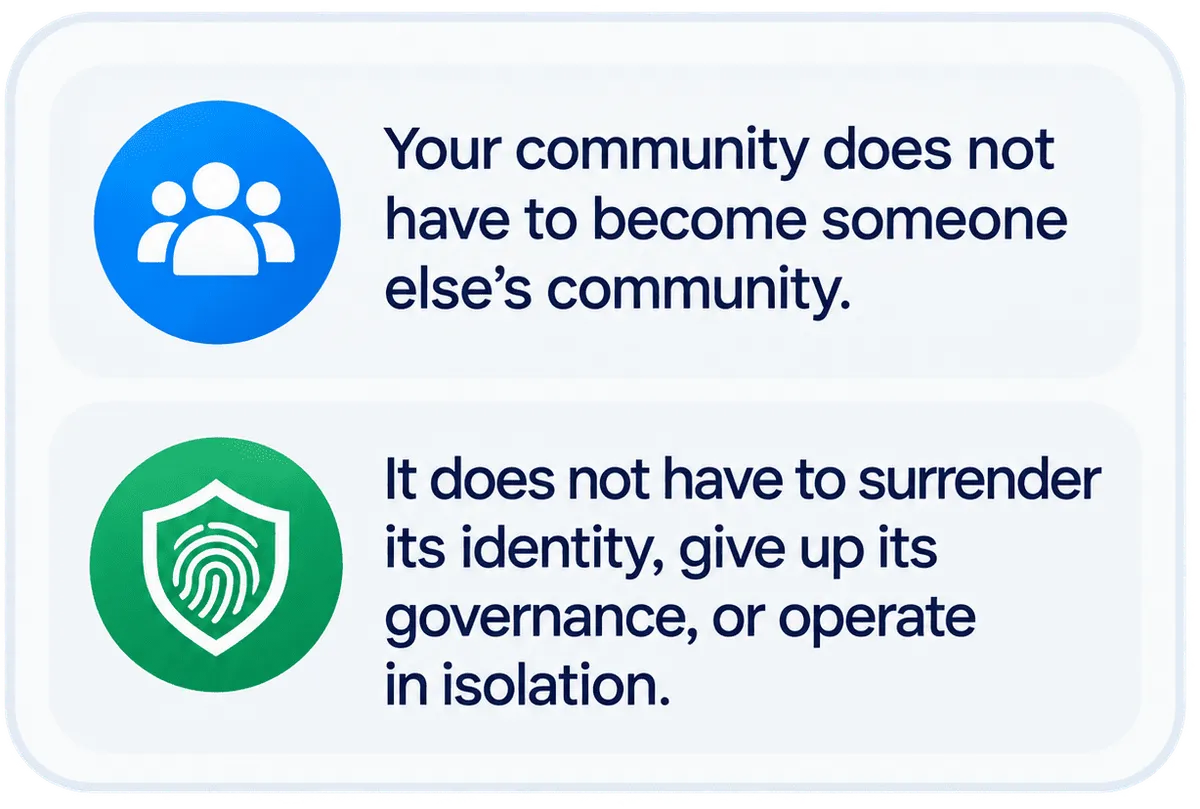
The RS Network allows communities to establish intentional relationships, share selected capabilities, and participate in something larger while remaining independently governed.
They simply no longer have to remain isolated.
Explore Your Network Opportunity

Connect People. Knowledge. Relationships. Purpose.


Quick Links
Connect
Based in the Boston, Massachusetts area, we work remotely serving communities nationwide.
Phone: +1 617-855-1106
(Redstring Corporate)